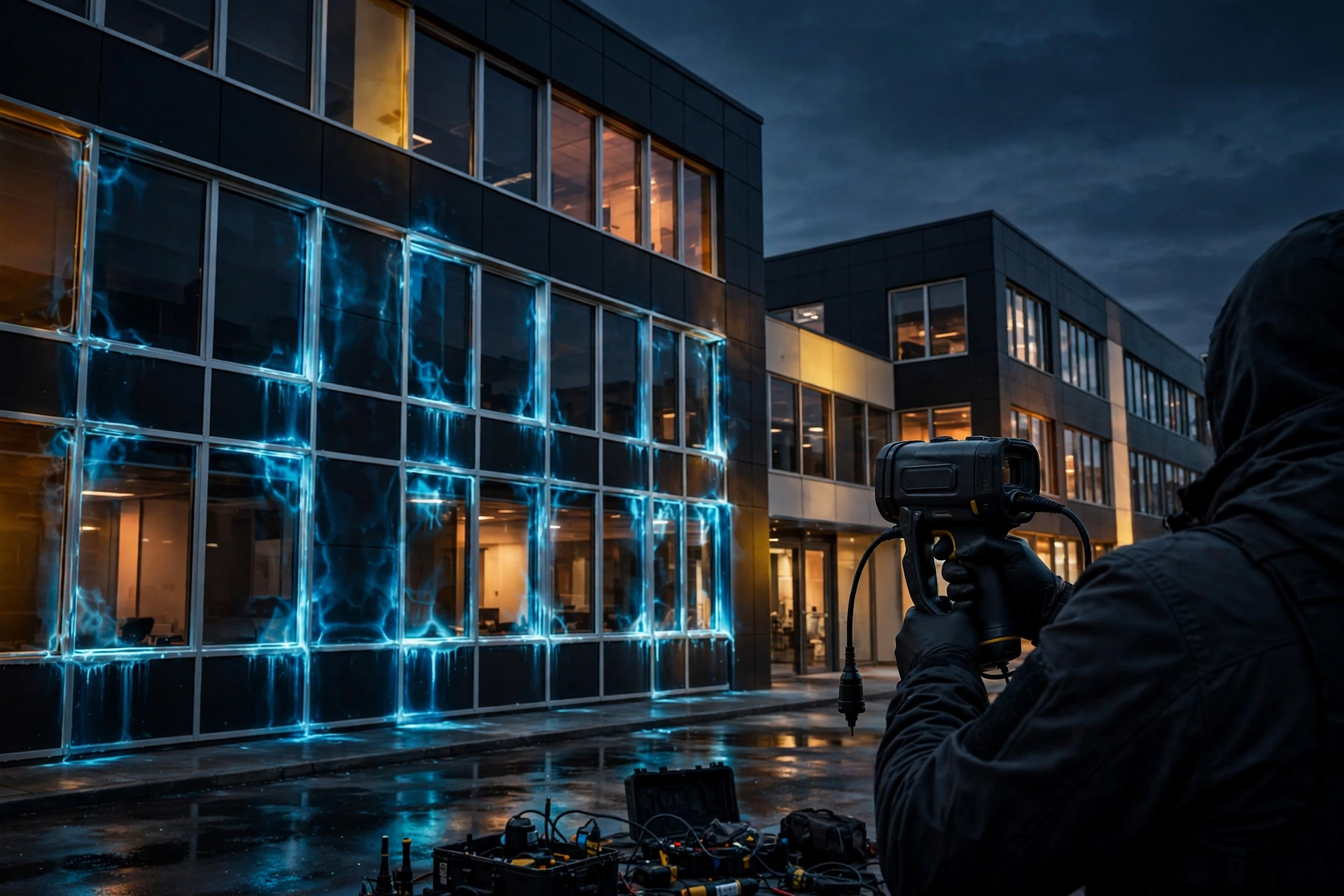
When rain finds its way into a commercial building — through stucco, around windows, behind flashing, over parapets — the result is a special kind of frustration. The stains appear far from the entry point. Repairs get made to the wrong spot. The leak 'comes back' next storm. For HOAs, property managers, and commercial owners, unresolved water intrusion means recurring interior damage, unhappy tenants, and repair bills that keep growing. Building enclosure water intrusion testing is diagnostic work, not repair work. We investigate the building's exterior skin the way a detective works a case: thermal imaging surveys of the facade, moisture mapping of interior surfaces, careful assessment of sealants, flashing, and drainage — and, when needed, controlled water testing that reproduces rain against one assembly at a time until the entry point reveals itself. Few specialists serve Ventura County for this kind of testing. We bring a diagnostic-first approach: prove where the water enters before anyone spends money fixing it.
Warning signs
When to call us
Bring us in when water intrusion recurs despite repairs, when you need to scope a repair correctly before bidding it, when an HOA board needs an independent assessment of a building-wide issue, or when a new leak appears and nobody can agree on the cause. Diagnostic testing before repair bidding routinely saves multiples of its cost by preventing wrong-scope work.
How we find it
An infrared scan of the building's exterior — ideally with a temperature differential between inside and out — reveals cooler patterns where moisture sits inside the assembly: around windows, at flashing lines, below parapets. We survey systematically, elevation by elevation, so no face of the building is missed.
From inside, we map moisture across ceilings and walls below the suspect areas with meters, building the same kind of survey grid used in residential work. The interior map and the exterior thermal pattern together triangulate the entry zone.
ASTM E1105 is the published standard for field water testing of installed windows, curtain walls, and doors: a calibrated spray applies water to one assembly at a time while observers watch inside for entry. We apply the same disciplined approach — one assembly, controlled water, monitored interior — to isolate exactly which window, joint, or flashing detail is admitting water. We describe our method against the standard; we don't claim certification under it.
Many intrusion problems are visible to a trained eye once you know where to look: failed sealant joints, missing or reversed flashing, weep holes blocked by paint, stucco terminating below grade. We document these conditions photographically as part of every investigation.
When conditions allow, we correlate findings with actual weather — which elevations leak in which wind directions, how long after rain starts the interior shows moisture. Santa Ana wind events are particularly diagnostic: leaks that appear only in wind-driven rain point to specific flashing and sealant defects.
Our process
- 1History and document review
We start with the building's story: leak history, past repairs, drawings if available, and the pattern of complaints. The history usually contains the hypothesis; testing proves or disproves it. - 2Exterior survey and thermal imaging
Systematic walk of every elevation with infrared imaging and close visual inspection of sealants, flashing, penetrations, and drainage details. - 3Interior moisture mapping
Meter-grid surveys of interior surfaces below suspect areas, documenting the extent and the wettest points. - 4Controlled water testing
Targeted wetting of suspect assemblies, one at a time, with interior monitoring — until an entry point is reproduced and confirmed. - 5Findings report with repair priorities
A written report: entry points identified, evidence for each, photographs, and prioritized repair recommendations your contractor can bid against. No repair upsell — the report is the product.
Commercial investigations are scoped per building — a single elevation with a known problem may take half a day; a full building survey takes longer. We coordinate access with property management, work around tenants where possible, and deliver a written report with photographs and prioritized findings. Our role ends at diagnosis: the report is built for contractors to bid from and boards to decide from.
Honest limitations
Controlled water testing reproduces rain; it can't reproduce every storm. Some leaks only occur in specific wind-driven conditions that testing approximates but can't duplicate exactly. We don't perform destructive probing without explicit owner authorization, and we don't do the repairs — our independence from repair work is what makes the findings trustworthy. Complex assemblies with multiple interacting defects may require phased testing across more than one visit.
Camarillo & Ventura County context
Ventura County's commercial building stock — stucco-clad offices, retail centers, and multi-family buildings — faces a specific climate pattern: long dry summers that bake sealants and open joints, then October–November Santa Ana winds driving rain sideways into every weak flashing detail, followed by winter atmospheric rivers that soak assemblies for days. Few specialists serve Ventura County for enclosure diagnostics; most operate out of Los Angeles. For Camarillo HOAs like those at Village at the Park or Leisure Village, and for property managers across the county, that means local, responsive testing without waiting on an LA firm's schedule.