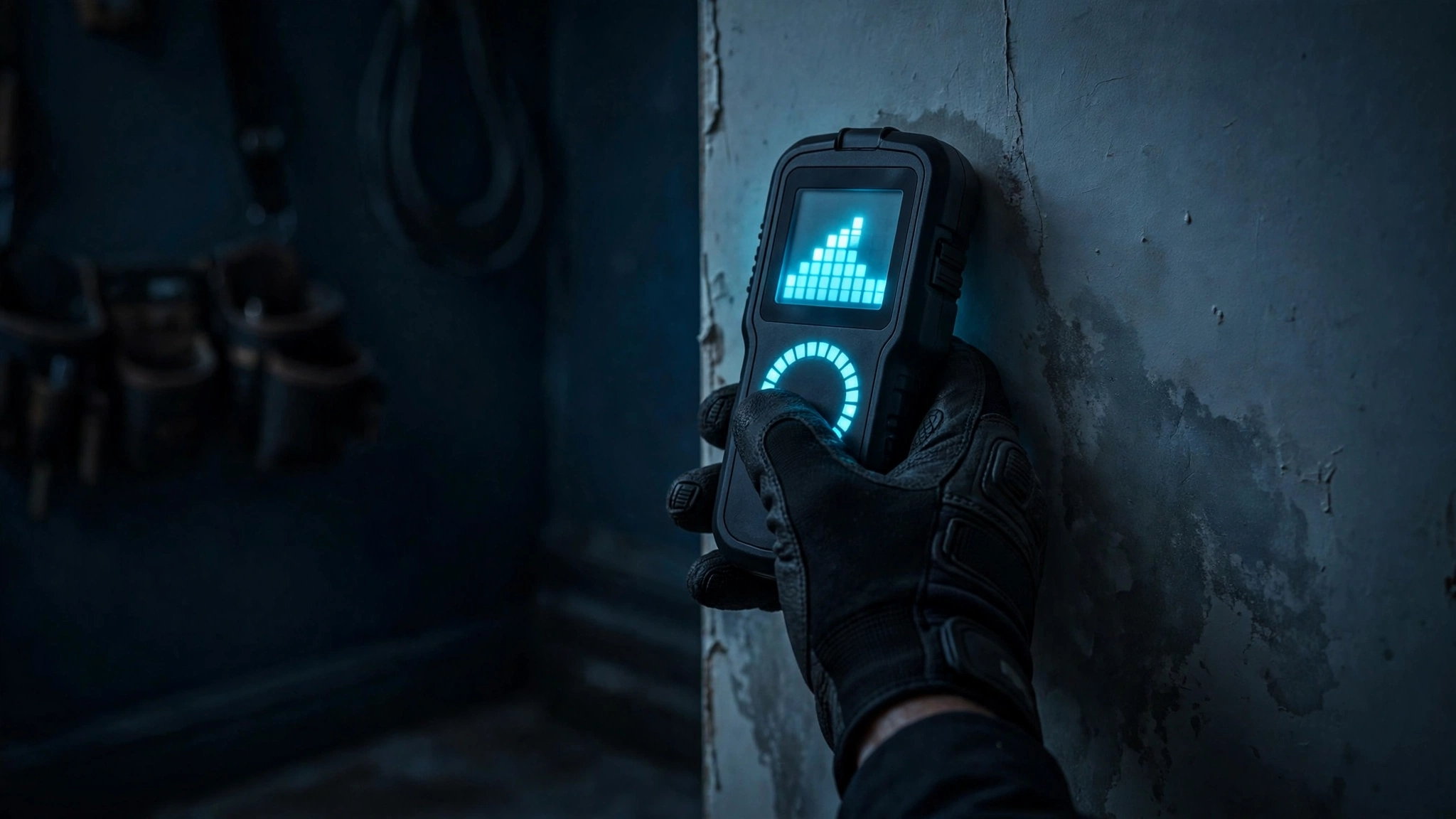
A stain on the ceiling, paint bubbling on a wall, a musty smell in a room with no visible water — indoor leaks are masters of misdirection. The water you see is rarely where the water starts: it travels along framing, pipes, and drywall, sometimes for many feet, before it shows itself. Guessing means opening the wrong wall. Our indoor wall, ceiling, and facility testing finds the actual source — not just the symptom. We combine thermal imaging, systematic moisture mapping, and acoustic listening to trace the water back to where it enters: a pinhole in a supply line, a failed shower pan, a slow drain connection, condensation from an HVAC line, or wind-driven rain finding its way through the building envelope. We work in homes, condos, offices, retail spaces, and multi-family buildings throughout Camarillo. Everything is non-invasive — no exploratory demolition to 'see what's in there.' When we're done, you know where the water is coming from, how far it has spread, and exactly what needs to happen next.
Warning signs
When to call us
Call when you see any of these signs — or when a contractor, home inspector, or property manager has flagged 'possible moisture' and you need to know whether it's active, where it's coming from, and how far it extends. The sooner an indoor leak's source is identified, the less material needs to be removed and the smaller the repair becomes.
How we find it
Moisture mapping is the core of indoor investigation: we take systematic moisture readings across walls, ceilings, and floors in a grid pattern, recording each one. The resulting map shows the damp area's shape, its wettest point, and the direction the moisture is traveling — which points back toward the source. It also documents the full extent of affected material, which matters for both repair scope and insurance claims.
A thermal camera sees what the eye can't: cooler damp areas behind paint and drywall, warm spots from a hot-water line leak, the outline of wet insulation. We scan the suspect areas and compare them against dry reference areas, then verify every thermal anomaly with a moisture meter — thermal suggests, meters confirm.
Pinless meters scan large areas quickly without leaving marks; pin-type meters measure exact moisture content at depth in a specific spot. Used together, they separate surface condensation from deep, sustained wetness — two very different problems with different fixes.
If the moisture map points to a supply line inside the wall, we listen. Pressurized water escaping through a pinhole makes a focused sound that a ground microphone or wall sensor can isolate, narrowing the source to a small section of wall.
For suspected shower pans, tub surrounds, windows, or flashing, we introduce water in a controlled way — one area at a time — while monitoring with meters. When the moisture reading spikes, we've found the entry point. This is the definitive answer when the source could be plumbing or the building envelope.
Our process
- 1Interview and visual survey
We start with what you've noticed — when it appeared, whether weather matters, what's above and behind the area — then survey the space for every visible clue. - 2Moisture mapping grid
Systematic meter readings across the affected areas build a map of the damp zone: its boundaries, its wettest point, and the direction of travel. - 3Thermal scan and verification
Infrared imaging reveals hidden patterns behind surfaces; every anomaly gets verified with direct moisture readings. - 4Source identification
Combining the map, the thermal pattern, and acoustic or controlled-water testing as needed, we identify where the water is actually entering. - 5Documented findings and next steps
You get the moisture map, photographs, readings, and a plain-language summary: the source, the extent of affected material, and what kind of contractor should handle the repair.
Most indoor investigations take one to three hours for a defined problem area. You can stay in the home while we work — the equipment is quiet and non-destructive. Expect a clear answer about the source and the spread, plus documentation you can hand to a repair contractor or an insurance adjuster. If the source turns out to be something outside our scope — a roof failure needing a roofer, for example — we'll say so and point you in the right direction.
Honest limitations
We find and document water sources; we don't perform mold remediation, drywall repair, or plumbing repairs. Some assemblies — multi-layer ceilings, tile over waterproof membranes — limit what non-invasive instruments can see, and we'll tell you when that's the case. If a leak only occurs under specific conditions (a particular shower used a certain way, wind-driven rain from one direction), we may need to reproduce those conditions, which can require a return visit.
Camarillo & Ventura County context
Camarillo's leak geography has two faces. Inside, the 1950s–1980s housing stock means aging supply lines, original shower pans, and decades-old drain connections hiding in walls. Outside, October and November bring Santa Ana winds that drive rain sideways into stucco, window flashing, and roof-wall junctions — then winter atmospheric rivers soak everything for days. We see both patterns every season: plumbing leaks that ignore the weather, and envelope leaks that only appear when the wind blows rain against the house. Our testing is built to tell them apart.